The Comfort of Local Success
In most SAP programmes, success within a module creates confidence. Finance reconciles correctly, procurement cycles execute as expected, production orders complete, and sales transactions process without error. Each function validates its own processes and confirms readiness. From a programme standpoint, this builds a strong sense of progress and control.
What Module Success Actually Proves
Module success proves that configured processes behave correctly within defined boundaries. Transactions follow rules, data is processed as expected, and outputs align with design logic. Each function signs off on its scope, and these confirmations are aggregated into a broader assurance that the system is working.
Where the Enterprise Begins to Diverge
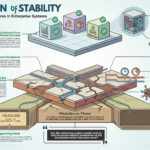
The enterprise does not operate within modular boundaries. It operates across them. Transactions initiated in one module propagate through others, carrying dependencies, assumptions, and timing implications. A process that works perfectly in isolation may produce unintended outcomes when it interacts with upstream and downstream functions.
The Nature of Cross-Module Failure
These failures are rarely immediate. They appear as inconsistencies between operational and financial views, delays in process completion, or manual interventions required to reconcile outcomes. A procurement process may function correctly, yet create inventory positions that do not align with planning assumptions. A production process may complete successfully, yet distort financial valuation. Each module works, but the business experiences friction.
Why This Pattern Persists
The pattern persists because validation is structured within modules rather than across flows. Testing confirms correctness in isolation but does not fully establish how processes behave when combined. Integration is treated as connectivity, not as continuous interaction across the enterprise.
The Question Before Sign-Off
The relevant question is not whether each module works as designed. It is whether the enterprise can operate coherently when those modules interact under real conditions.
Module success confirms correctness.
Enterprise success confirms coherence.