Implementation partners are deeply embedded in SAP programmes. They design processes, configure systems, execute testing, and support delivery milestones
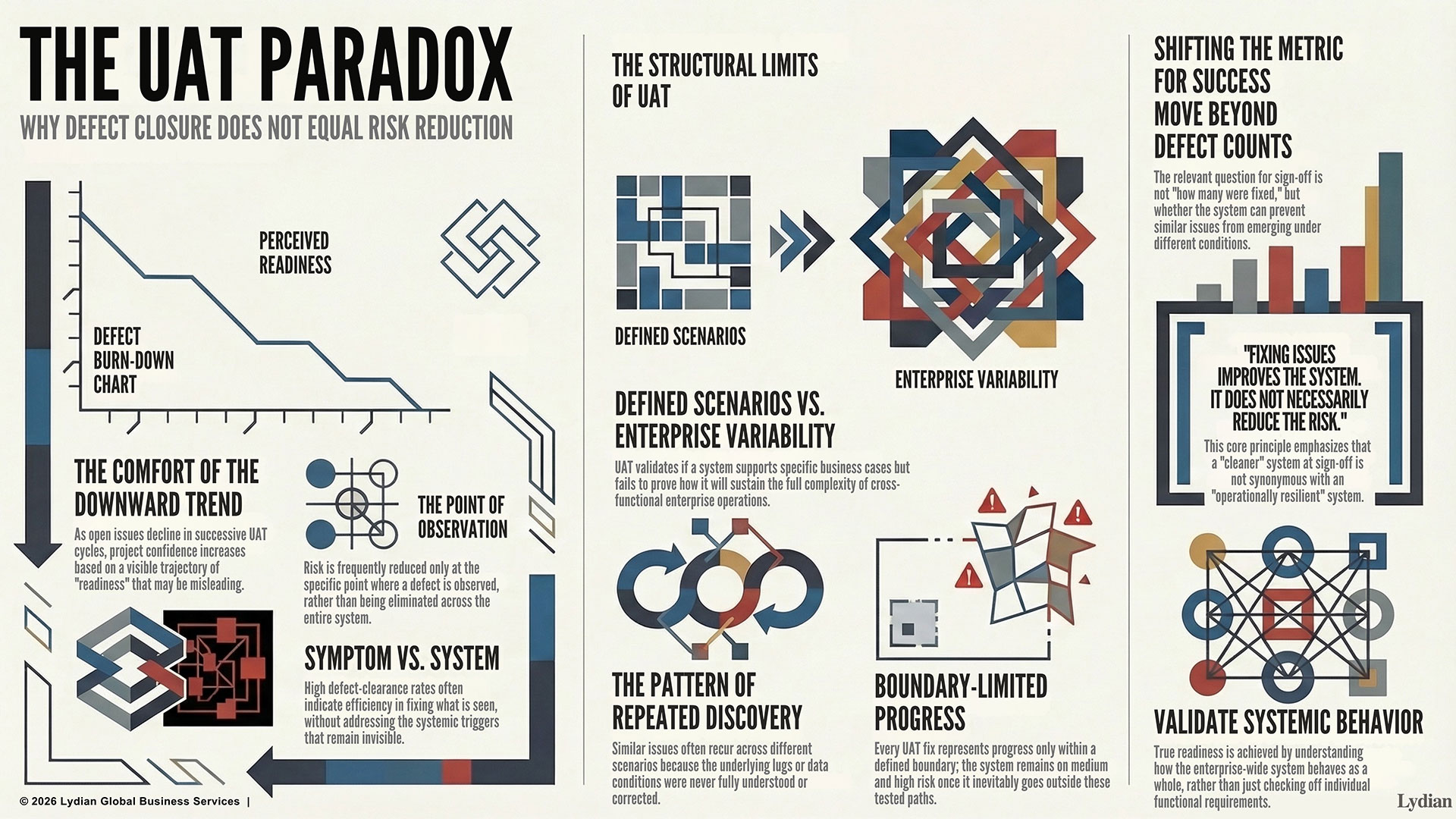
In most SAP programmes, User Acceptance Testing is seen as the final opportunity to identify and resolve issues before go-live. Defects are logged
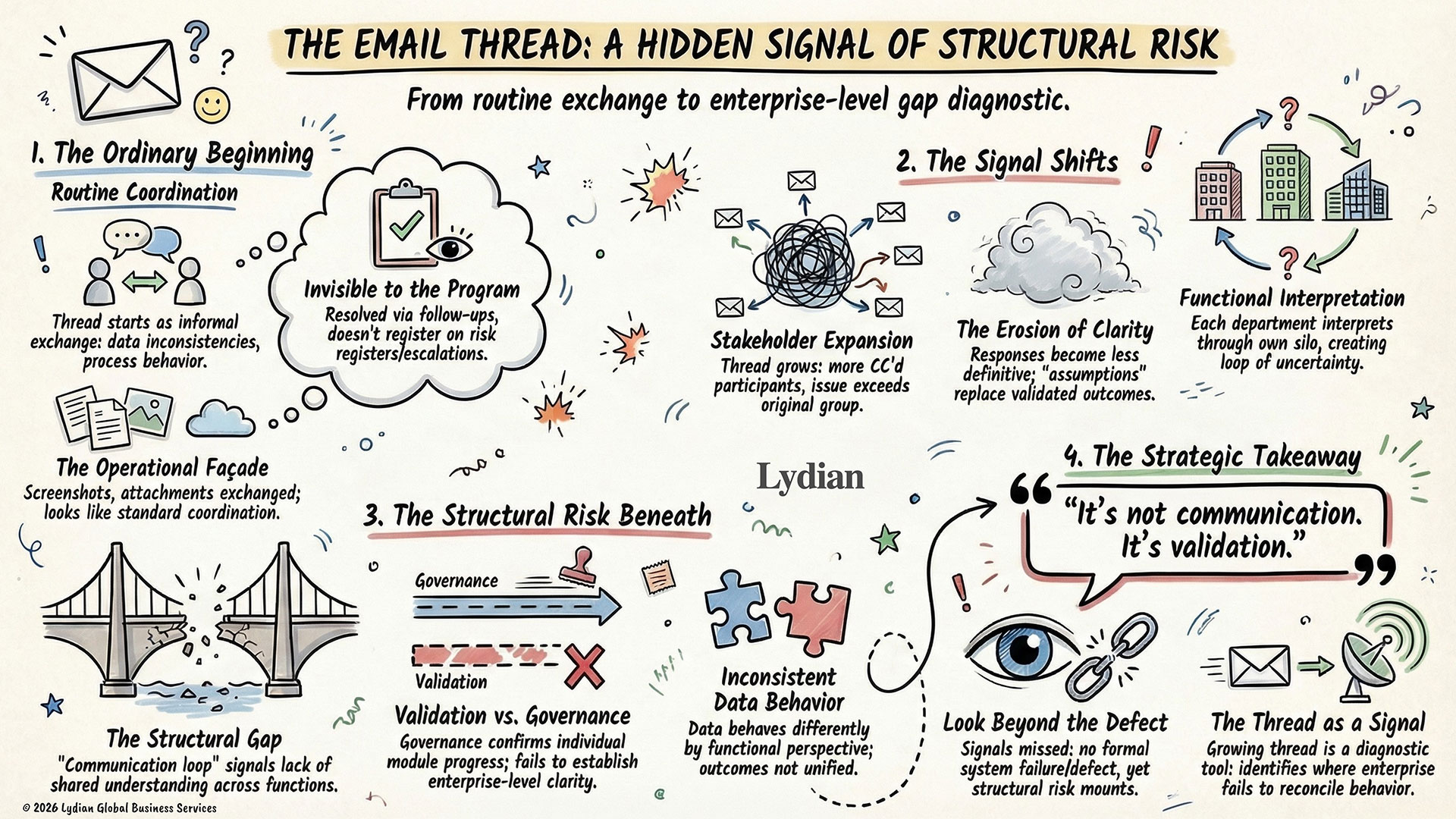
In most SAP programmes, risk does not announce itself through formal escalation. It appears in email threads. A clarification request between functions
In most SAP programmes, alignment between finance and operations is assumed once integration points are configured and tested.
In most SAP programmes, testing is designed around predictability. Scenarios are defined, inputs are controlled, and expected outcomes are clearly documented
In most SAP environments, errors are treated as isolated system events. A transaction fails, an exception is triggered, or a data inconsistency appears within a specific module
In most SAP programmes, completion is defined with clarity. Configuration is finished, testing cycles are closed, defects are resolved within tolerance
In most SAP programmes, testing success is presented as a definitive milestone. Cycles are completed, defect counts are reduced, and sign-offs are secured across modules
In most SAP programmes, the declaration of “system ready” marks a critical milestone. Configuration is complete, transports have been moved, defects have been resolved
In most SAP programmes, confidence builds as dashboards turn green. Milestones are marked complete, defect logs shrink, and testing cycles conclude with formal sign-offs across functions.