The Structure of Oversight
Steering committees are designed to provide oversight, direction, and control over SAP programmes. They review status, assess risks, and approve key decisions. From a governance standpoint, they represent the highest level of programme accountability. Leadership expects these forums to provide a clear and accurate view of progress and readiness.
What Is Presented to Them
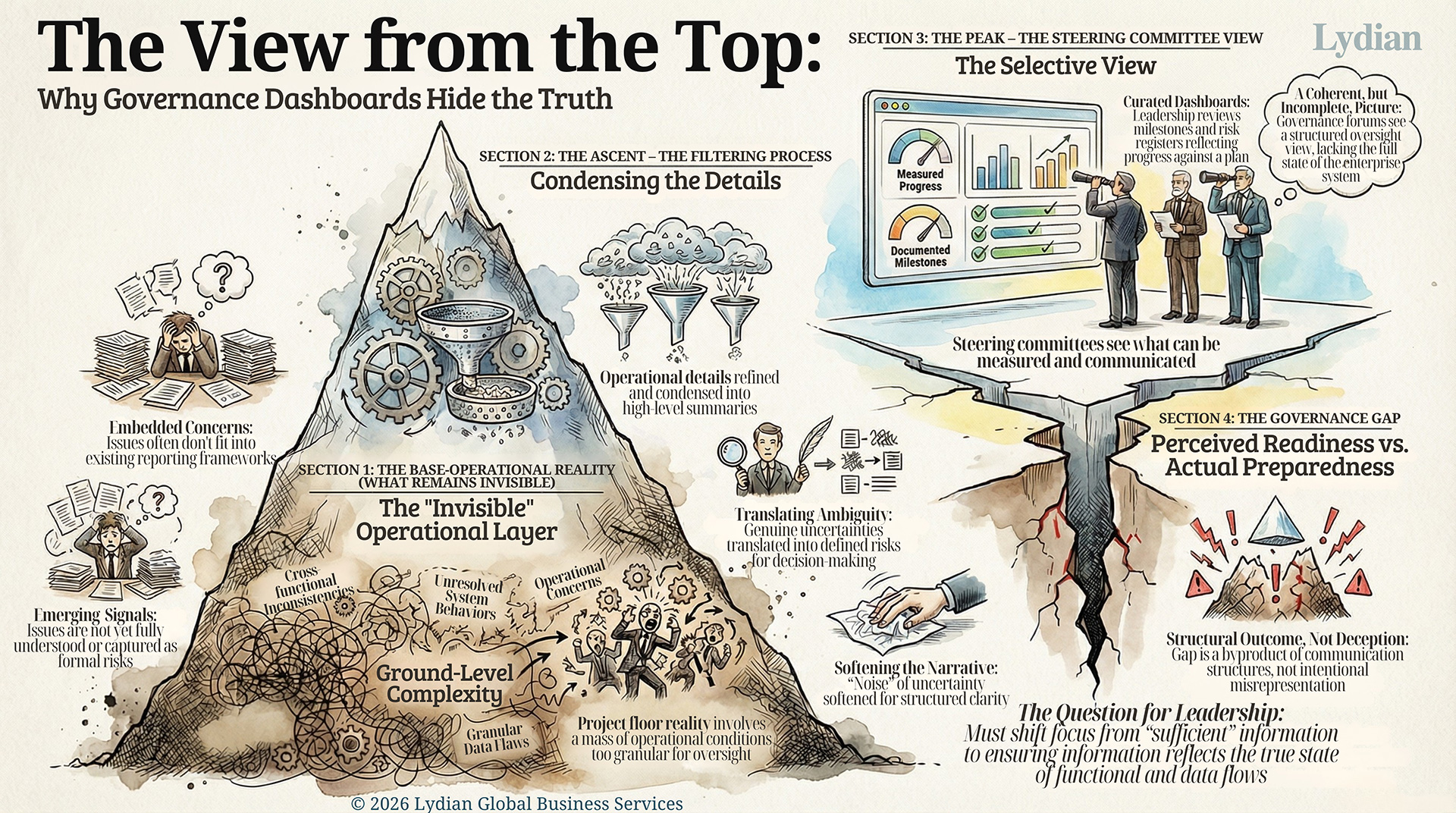
The information presented to steering committees is typically structured, summarised, and curated. Dashboards highlight milestones, risk registers capture known issues, and programme updates reflect progress against plan. This reporting is necessary to manage complexity, but it is also selective. It reflects what can be measured, documented, and communicated within the constraints of formal governance.
How the View Becomes Filtered
As information moves upward, it is refined at each layer. Operational details are condensed into summaries. Ambiguities are translated into defined risks. Uncertainty is often softened to maintain clarity in communication. By the time the information reaches the steering committee, it represents a structured narrative rather than the full complexity of programme reality.
What Remains Invisible
Certain elements do not translate easily into formal reporting. Cross-functional inconsistencies, unresolved interpretations of system behaviour, and emerging operational concerns may remain embedded within working teams. These issues are not always captured as formal risks, either because they are not yet fully understood or because they do not fit existing reporting frameworks. The steering committee sees a coherent picture, but not necessarily a complete one.
The Governance Implication
This filtering is not intentional misrepresentation. It is a structural outcome of how programmes communicate. However, it creates a gap between perceived readiness and actual enterprise preparedness. Steering committees make decisions based on what is visible, while critical signals may remain outside their line of sight.
The Question for Leadership
The relevant question is not whether the steering committee has sufficient information. It is whether the information reflects the full state of the enterprise system across functions, data flows, and operational conditions.
Steering committees see what is presented.
Governance must ensure that what is presented is enough.