The Language of Readiness
In most SAP programmes, the declaration of “system ready” marks a critical milestone. Configuration is complete, transports have been moved, defects have been resolved within tolerance, and testing cycles have concluded successfully. For the CIO, this signals technical closure. For the Programme Director, it indicates that delivery has reached its intended endpoint. For leadership, it creates a clear message that the system is ready for the business.
What “System Ready” Actually Confirms
The phrase carries a specific meaning within programme structures. It confirms that the system behaves as designed, that configured processes execute correctly, and that known defects have been addressed or deferred within acceptable limits. Each module validates its readiness independently, and these confirmations are aggregated into a programme-level declaration. The system is ready within the boundaries that were defined for it.
Where the Business Encounters Friction
The business does not operate within those boundaries. It operates across them. Transactions move through multiple functions, data flows across systems, and outcomes depend on consistency across the entire lifecycle of operations. It is at these intersections that friction appears. A process that works within a module may fail when it interacts with another. Data that is valid at entry may become inconsistent downstream. Operational teams begin to intervene manually, not because the system is broken, but because it has not been validated as a complete enterprise.
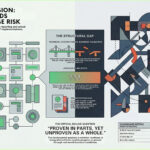
The Structural Gap Between System and Enterprise
This gap is structural, not incidental. Validation is performed against configuration, not against real operating conditions. Cross-functional scenarios are assumed rather than proven. Integration points are confirmed technically but not exercised through full-cycle business flows. Governance relies heavily on system integrator reporting, which reflects delivery progress more than enterprise readiness. The system is declared ready because it meets defined criteria. The business remains uncertain because those criteria do not reflect how it actually operates.
The Question Before Transition
For leadership, the distinction is critical. A system can be ready without the business being ready to run on it. Investors expect continuity, customers expect reliability, and employees expect clarity in execution. These expectations depend on enterprise coherence, not module completion.
The relevant question before go-live is whether the enterprise system has been validated end-to-end under real business conditions, or whether readiness has been inferred from configuration completeness.