Synopsis
In many automotive supply chains, MRP runs complete on time, forecasts are shared, and EDI messages flow as designed. Yet execution still feels strained, reactive, and fragile.
The gap often lies in how plans are translated into action.
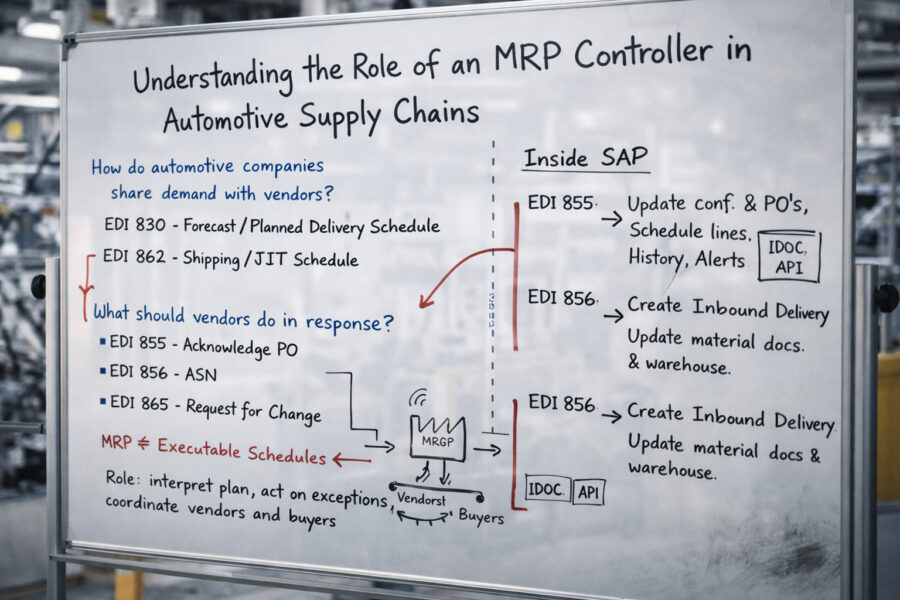
One of the most misunderstood roles in this process is the MRP Controller. This is not the person pressing the MRP button. It is the role responsible for interpreting planning outputs, managing schedules, coordinating vendor responses, and ensuring that commitments across purchasing, production, and suppliers remain aligned.
Automotive OEMs communicate demand through structured EDI messages, separating forecasts from firm shipping schedules. Vendors respond with confirmations, shipping notices, and change requests. SAP processes each of these as business events, updating schedules, deliveries, inventory, and procurement records accordingly.
When these signals are misunderstood, treated as interchangeable, or left without clear ownership, supply chains slip into exception-driven firefighting.
This article explains how demand is communicated, how SAP processes vendor responses, and why execution depends far more on role clarity and operating discipline than on additional tools. For organisations where MRP outputs look correct but outcomes remain unstable, this perspective is worth revisiting.
Main Article
In automotive supply chains, planning does not fail because systems are weak. It fails because roles, schedules, and expectations are poorly understood.
One of the most misunderstood roles in this ecosystem is that of the MRP Controller. Not the person running MRP. The person responsible for turning plans into executable schedules across vendors, buyers, and production.